Summer is nearly over, and that means kids are getting ready to start the new school year. While they will be learning science, math, arts, and other things, it is never too early to start their financial education. Today, let’s talk about how to help kids navigate the world of money. But first, there’s one thing all parents should know, and if possible, take advantage of. The Registered Education Savings Plan, or RESP.
The RESP is a government-registered savings plan that helps parents save for a child’s education. Any adult can open an RESP for a child. There is a lifetime contribution limit of $50,000 per child. But the best part is that the government matches 20% of your annual contributions, up to $500 per year, on the first $2,500 you contribute. This means parents get a 20% return without having to do anything! (with no other variables considered).
Once you’ve set up the RESP, you can focus on helping the child in your life. Let’s start with younger children.
Money Tips for Younger Children
1 | Visual Money Savings
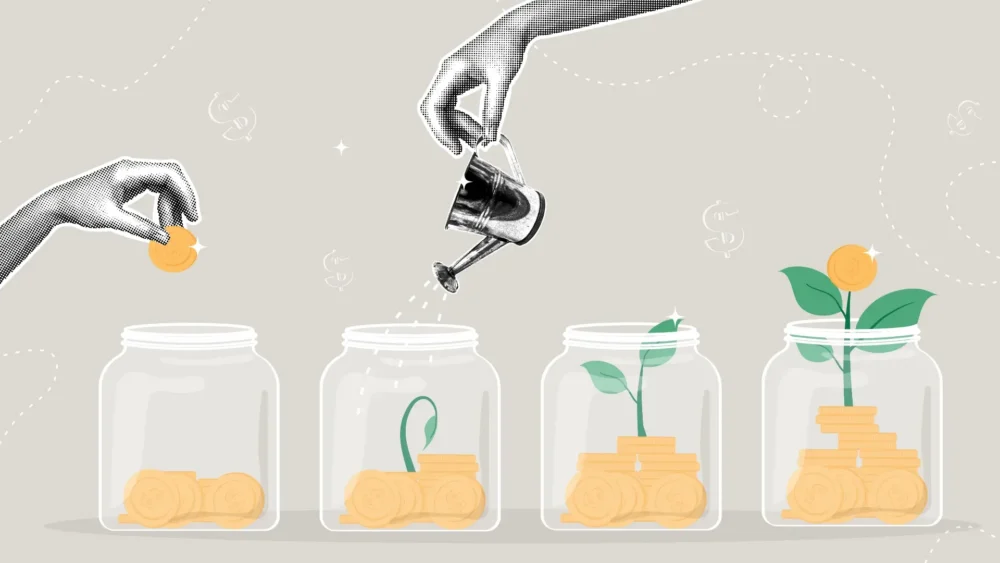
Visuals can help children better conceptualize more complex ideas. So, use an actual piggy bank help them save. Bonus points if they’re mechanical! This helps kids understand the concept of watching money grow and could help them realize the value of saving.
2 | Compounding Through Time
The power of compounding is where magic happens for portfolios. But small children can’t necessarily grasp the idea. So, it makes sense to make small delays to show them that waiting has value. For instance, “You won’t get ice cream today, but you’ll get a Needoh tomorrow.” Something like that but maybe don’t say Needoh given they’re nearly impossible to find.
It is a variation on a delayed gratification experiment done by Walter Mischel at Stanford University, where he offered a child a small immediate reward, or two small rewards later. He then left a child in a room with a single marshmallow for 15 minutes. If, upon his return, the child had not eaten the marshmallow, then theyreceived two marshmallows, or a single marshmallow and a pretzel. The child could choose what it wanted. Mischel followed the children through life and found that the ones who waited had better life outcomes.
3 | Buckets for Kids
It’s never too soon to start using the Bucket Method, you split money into various buckets. One bucket could be towards saving to a specific goal, like an electric scooter. The second bucket could be a short-term spend like a treat. The third could be a charitable donation or gifting bucket. With this, the money is pre-committed before the urge for immediate gratification hits. You could also have each bucket be a special piggy bank.
Money Tips for Tweens
1 | Introduce Responsibility with a Small, Regular Allowance
Giving a child a fixed small allowance gives them the freedom and independence to decide what to do with their money. If a child has $5 a week, then they can decide how they want to spend it. Immediately at Dollarama or save up for something in a few weeks.
2 | Make Specific Financial Goals
We’ve talked before about the importance of financial goals, and it’s never too soon to start helping children figure it out as well. As adults we find it hard to “save for retirement” which is why many recommend vision boards, or other saving tips. How can a child be expected to visualize something vague as “long-term financial freedom”? Instead, help the child draw up specific goals like, “$350 for a good drone.” Then make a chart to track how much is saved and keep adding to it.
3 | Open a Savings Account
Depending on how old your child is, it might be time to open a savings account, ideally by going into a bank so the child can experience the whole thing. Major banks offer no-fee youth savings accounts, so it will be a place for them to park their money with no cost to you.
Money Tips for Teens
1 | Opportunity Cost
For older children, opportunity cost is an important lesson to learn. If they spend all their savings on a single thing, then they don’t get to spend it on other things as well. It is of value to point this out, saying, “If you buy that, you can’t get this.” This helps make conscious money decisions.
2 | Budgets
Teenagers are slowly building towards leaving the nest, and I can tell you that one of the hardest things I had to learn when I left home was how to manage a budget. I now tell all the teens in my life to begin making budgets, even if they’re simple ones, so that it is easier when they’re on their own. You can find details here.
3 | Pay Yourself First
Many financial influencers will tell adults this, but I don’t see why this advice should not start with your very first job. So, tell the teens that some of the money they’re making while working part-time at the ice cream parlour in the summer should be put towards their own future.
If you need more tips and advice, you can find it at the Government of Canada website. As they say, “Teaching children how to manage money will help them throughout their lives. If you start early, you can build on their knowledge as they grow.”
Happy Savings!
Disclaimer
The views and/or opinions expressed above are of a general nature and are for informational purposes only. The contents should not be considered as advice and/or a recommendation to purchase or sell the mentioned securities or used to engage personal investment strategies. Investors should consult their investment advisor before making any investment decision.
Commissions, management fees and expenses all may be associated with investing in Harvest Exchange Traded Funds (managed by Harvest Portfolios Group Inc. (the “Funds”). The funds are not guaranteed, their values change frequently and past performance may not be repeated. Please read the relevant prospectus before investing.