By Caroline Grimont
I live in the Greater Toronto Area, and while I fully recognize that winters here are much milder than many other parts of Canada, the first week of January can always feel dull and depressing. The holiday season of excesses is over, my New Year (overly ambitious, most of the time) resolutions are still in the “This year, I WILL accomplish them!” phase, and the weather is cold, rainy and gloomy. In fact, it feels like the only thing looming ahead is the biting cold of February.
And this is why the first week of January is the best time to start planning for the holiday season at the end of the year. I can feel you roll your eyes and say, “I STILL have the last holiday leftovers in my fridge!” and I hear you; I have leftovers too. But I reiterate that now is when you should start planning for December, and the reason is simple. In the words of Benjamin Franklin, failing to plan is planning to fail, and even a basic plan in January will help December go much smoother. And this year, you’ll have a special superpower to help you. My “Ho-Ho-Ho” Holiday Planner is my secret weapon, and today, I’m going to share it with you.
January Isn’t Depressing – Blue Monday was a PR Campaign.
We’ve talked a bit before about budgeting and planning, and this is the same psychology behind starting planning for the end of the year in January. If you have a plan, you know where you’re going.
But it’s harder for us to plan, because immediate gratification is so much easier. Things that are close, both physically and in terms of time, tend to feel more important. That’s why we’d rather splurge on “Blue Monday” (did you know Blue Monday was all a PR campaign by UK-based Sky Travel to sell more plane tickets?) deals in January, rather than save for the holidays, or anything else, really. Like we discussed last year, this is because of “present bias,” which explains why we settle for smaller rewards right now, rather than wait for a bigger reward later.
To counter present bias, we’d shared 3 tips:
- Have a physical reminder of your goal, like a photograph or a printout, that makes the distant immediate,
- Hold off on immediate spending, delaying even as little as a day, and
- Automate your savings.
How to use all of this to plan for the next holiday season? I try to make this plan more fun, and that’s where my “Ho-Ho-Ho” holiday planner comes in.
The Ho-Ho-Ho Holiday Planner in January
Whether you celebrate Christmas, or Hannukah, or Kwanza, or enjoy a secular gathering of friends and family at a time when workloads are a bit lighter, the fact is that for many of us, November and December tend to cost a little bit more. Some of us attend or host parties, or we exchange gifts, or take trips. In any case, all the costs start to add up. And so, you need a plan. In keeping with the holiday theme, my goal is “Ho-Ho-Ho.” Here are the components:
- Hold Firm on the Plan
- Home is Where the Heart Is
- Hope For the Best, Prep for the Worst
Hold Firm on the Plan
To hold firm on the plan, you must have one. I start by looking at what I spent in the past December. Then I decide if that was enough, or if it felt like I was dipping into my credit cards or savings. I then use all of that to come up with a concrete number of how much I want to spend in the next holiday season.
As an example, let’s assume that in December 2026, I want to spend $1,200. So, my holiday budget is now $1,200. That means, over the next 12 months, I need to save $100, or approximately $25 a week.
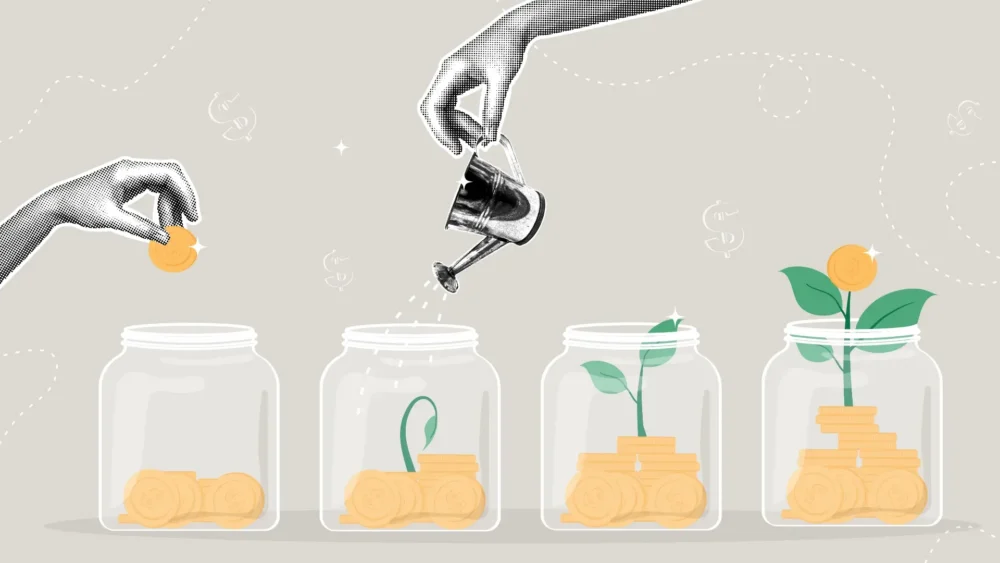
The next step is to open a no-fee bank account, at a financial institution such as Simplii Financial, or Wealthsimple, or EQ Bank, where you can have a small balance for no charge. And then, on one day of the week, automate a $25 transfer into the account, and voila! By the holidays, you have your target saved.
Home is Where the Heart Is
Yes, this is a sentimental concept, but the holidays do soften my heart, and the warmth of the season has not yet been chased away by the January snows. For this “Ho” in my plan, I make a list of everyone that I’d like to remember in December, listing out family, and friends, and colleagues, and anyone else. Then, alongside their names, I list out the amount I’d like to spend on them. Remember, this is not set in stone, so this list, and the amounts, could change through the year.
I find writing this down helps, as I keep track of who is important to me, and makes sure that I don’t forget anyone. Writing this list out in January is important, because I can remember everyone I met over the past month. This list also helps me through the year – as I live my life in my normal way, I might find something within my budget that would suit a particular person on my list, so I collect gift ideas, or even the gifts themselves.
The one thing to remember is that if I buy a gift in July, I should take that amount out of my holiday budget, so that I don’t end up overspending.
Hope for the Best, Prep for the Worst
The good thing about planning in January is that many things are on sale right now, so if you have some money spare, and you have your budget and your list, you could start knocking things off right away.
But even if you don’t have this plan and a budget and a means to save up, means you’re prepared. Because of your budget, you know exactly how much you need, you know that you need it in the holiday season, so you know exactly when you need it.
So even if something bad happens, you have a plan. You could even consider this your Holiday Emergency Fund!
Available Option to hold Your Holiday Fund?
The only question left is where to hold this fund. You could, of course, leave it in cash in your no-fee account. Or, you could hold it in a cash-equivalent fund like Harvest Canadian T-Bill ETF (TSX:TBIL), where you have near instant access to it. Or, if you are willing to take some risk, you could invest in an exchange traded fund that invests in iconic brands like Apple, McDonald’s, and Coca-Cola, that are trendsetters and market leaders. As my colleague Ambrose O’Callaghan explains, the Harvest Brand Leaders Plus Income ETF (HBF:TSX) targets the world’s biggest brands that possess global reach, strong financials, and dominant market shares, and offers three crucial elements that provide value to unitholders: Quality, Growth, and Income.
Investors should remember that this is a fund that invests in stocks and so its value can either rise or fall. What this means is that investors could lose money, depending on when they buy and sell this ETF. As guide, “One way to gauge risk is to look at how much the ETF’s returns change over time. This is called ‘volatility’. In general, ETFs with higher volatility will have returns that change more over time. They typically have a greater chance of losing money and may have a greater chance of higher returns. ETFs with lower volatility tend to have returns that change less over time. They typically have lower returns and may have a lower chance of losing money.” Harvest has rated the volatility of this ETF as medium.
Stay informed—subscribe to the Harvest ETFs YouTube channel.
Disclaimer
The information is meant to provide general information for educational purposes. Any security mentioned herein is for illustration purposes and should not be taken as an invitation to purchase or sell such security. Commissions, management fees and expenses all may be associated with investing in Harvest Exchange Traded Funds managed by Harvest Portfolios Group Inc. (the “Funds”). Please read the relevant prospectus before investing. The Funds are not guaranteed, their values change frequently, and past performance may not be repeated. Distributions are paid to you in cash unless you request, pursuant to your participation in a distribution reinvestment plan, that they be reinvested into available Class units of the Fund you own. If a Fund earns less than the amounts distributed, the difference is a return of capital.