Par Ambrose O’Callaghan
À l’approche du milieu des années 2020, le secteur industriel semblait prêt à bénéficier d'un secteur manufacturier américain en plein essor. Un an plus tard, ce dossier semble aussi solide qu’au printemps 2024. L'équipe de gestion des investissements de Harvest ETFs a reconnu cette tendance, ce qui a conduit au lancement du FNB Harvest Industrial Leaders Income (HIND:TSX) .
Aujourd'hui, je souhaite explorer comment cette histoire a évolué depuis lors et pourquoi cet ETF industriel offre une opportunité de se connecter à la renaissance du secteur manufacturier américain.
Une opportunité historique dans le secteur industriel
Le secteur industriel est constitué d’industries impliquées dans la production et la transformation de matières premières, de biens ou de services. En termes de HIND, cela comprend une gamme de sous-secteurs :
- Aérospatiale et défense
- Sociétés commerciales et distributeurs
- Composants et équipements électriques
- Transport ferroviaire
- Machines, fournitures et composants industriels
Les industries ne sont plus un secteur traditionnel à croissance lente. Le secteur est un moteur essentiel de la transformation économique aux États-Unis. Une transformation économique que nous avons caractérisée par les « R » : Reprise, Reconstruction et Rapatriement. Les innombrables avantages économiques dont les industriels peuvent bénéficier sont ancrés dans des évolutions telles que la tendance à la relocalisation post-pandémique, une importante relance des infrastructures par le biais de textes législatifs clés, ainsi qu’un boom des technologies manufacturières.
Secteur manufacturier américain | La reprise
À l’aube des années 2020, il existait des arguments économiques solides en faveur d’un redémarrage du secteur manufacturier américain. En mai 2024, l’American Society of Civil Engineers a publié un rapport ; Combler le fossé : impacts économiques des investissements dans les infrastructures nationales . « Entre 2024 et 2033, les besoins en infrastructures devraient s’élever à 7,4 billions de dollars… On prévoit environ 4,5 billions de dollars d’investissements, ce qui couvrira environ 60 % des besoins totaux, laissant un déficit de 2,9 billions de dollars.
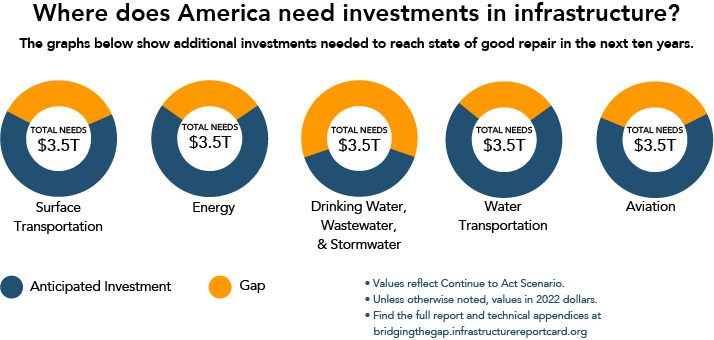
Source : Combler le fossé, ASCE. Mai 2024.
Le rapport estime également que cet écart de 2,9 billions de dollars coûtera à l’économie près de 4 billions de dollars de PIB perdu d’ici 2033.
Heureusement, grâce à des lois clés comme le CHIPS and Science Act (2022) et l'Infrastructure Investment and Jobs Act (IIJA), des centaines de milliards ont été affectés à la revitalisation des secteurs des infrastructures et de l'énergie/des services publics américains.
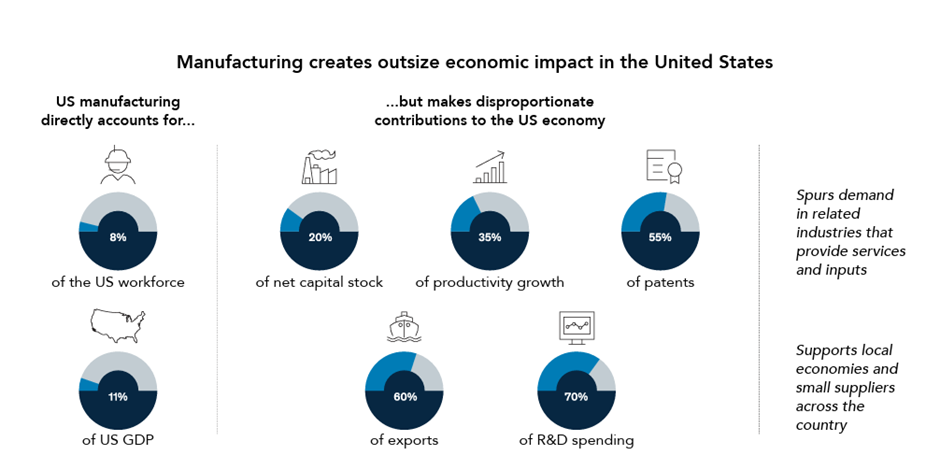
Source : Bureau of Economic Analysis des États-Unis ; Bureau of Labor Statistics des États-Unis, analyse du McKinsey Global Institute.
HIND compte plusieurs participations bien placées pour tirer profit de cet investissement massif :
Caterpillar Inc , une holding de HIND, fabrique et vend des équipements de construction et d'exploitation minière, des moteurs diesel et à gaz naturel, des turbines et des locomotives diesel-électriques aux États-Unis et dans le monde entier. Alors que les tarifs douaniers sont apparus comme un obstacle au cours des derniers mois, Caterpillar perspectives à long terme reste forte grâce à la poussée industrielle du pays.
Canadien Pacifique Kansas City Limitée offre un service ferroviaire massif et une portée réseau aux marchés nord-américains. L'IIJA a alloué 102 milliards de dollars au financement total du secteur ferroviaire.
Investissement dans les infrastructures | La reconstruction
Aux États-Unis, il existe un consensus bipartisan selon lequel les dépenses en infrastructures constituent une priorité pour l’avenir. Cela permet de réduire le risque politique pour le secteur industriel à moyen et long terme. L’IIJA, d’un montant de 1 200 milliards de dollars, pourrait n’être qu’un début pour cet espace, avec une nouvelle législation et des capitaux privés qui aggravent cette tendance.
L’IIJA alloue 550 milliards de dollars en nouveaux investissements fédéraux. Cette infrastructure a été divisée en plusieurs segments. Il comprend des fonds destinés à des projets tels que des autobus scolaires et de transport en commun électriques, des bornes de recharge pour véhicules électriques (VE), et bien plus encore.
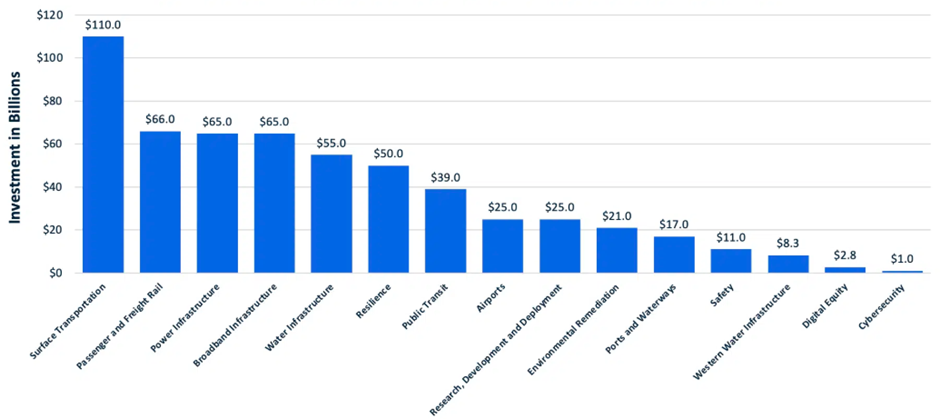
Source : Gordien, 22 juin 2023. https://www.gordian.com/resources/unveiling-iija-an-overview-of-federal-infrastructure-funding/
Un consensus bipartisan, du moins en ce qui concerne les dépenses de défense, existe toujours aux États-Unis. Selon l'Institut international de recherche sur la paix de Stockholm Les dépenses militaires des États-Unis ont augmenté de 5,7 % pour atteindre 997 milliards de dollars en 2024. Cela représente 66 % des dépenses totales de l’OTAN et 37 % des dépenses militaires mondiales totales. Les États-Unis ont continué à consacrer une grande partie de leur budget militaire à la modernisation de leurs capacités militaires et de leur arsenal nucléaire afin de maintenir leur avantage stratégique sur la Russie et la Chine.
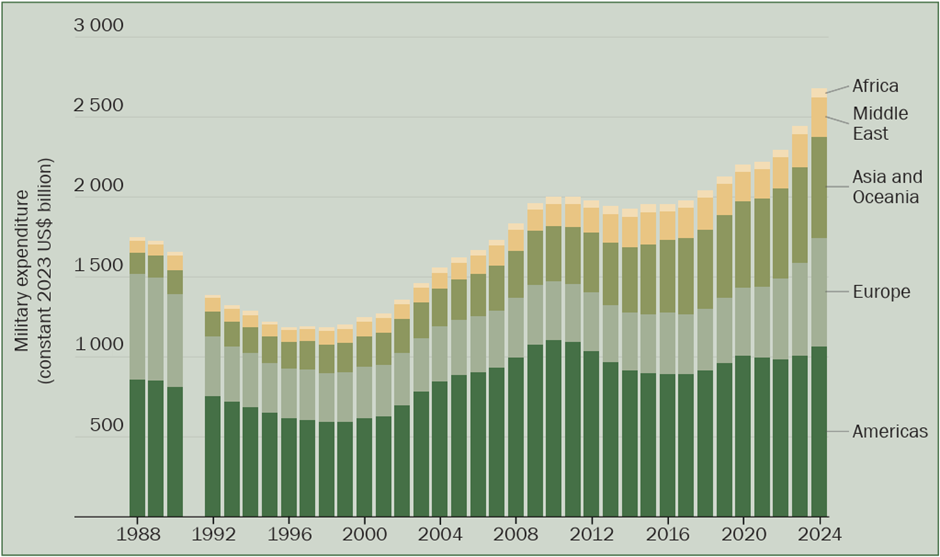
Source : Institut international de recherche sur la paix de Stockholm, 2024.
Les entreprises de l'aérospatiale et de la défense comme Lockheed Martin et RTX Corporation sont bien placés pour profiter de cet environnement. Il s’agit de deux autres participations auxquelles HIND offre une exposition.
Avantage américain | Rapatriement
Les administrations républicaine et démocrate ont toutes deux cherché à réorganiser le secteur manufacturier américain. En 2022, la Maison Blanche de Biden a affirmé que les États-Unis ne fabriquaient que 12 % des puces électroniques mondiales, contre 37 % en 1990. Grâce à des lois comme CHIPS, elle a cherché à inverser cette tendance.
Deloitte écrit que les ventes de puces devraient monter en flèche au milieu de cette décennie, grâce à l'IA générative et au développement de centres de données. UN Rapport de février 2025 On estime que l’industrie des semi-conducteurs pourrait atteindre 2 000 milliards de dollars d’ici 2040. Les ventes de semi-conducteurs ont atteint 627 milliards de dollars américains en 2024 et devraient atteindre 697 milliards de dollars américains en 2025, ce qui représenterait un niveau record.
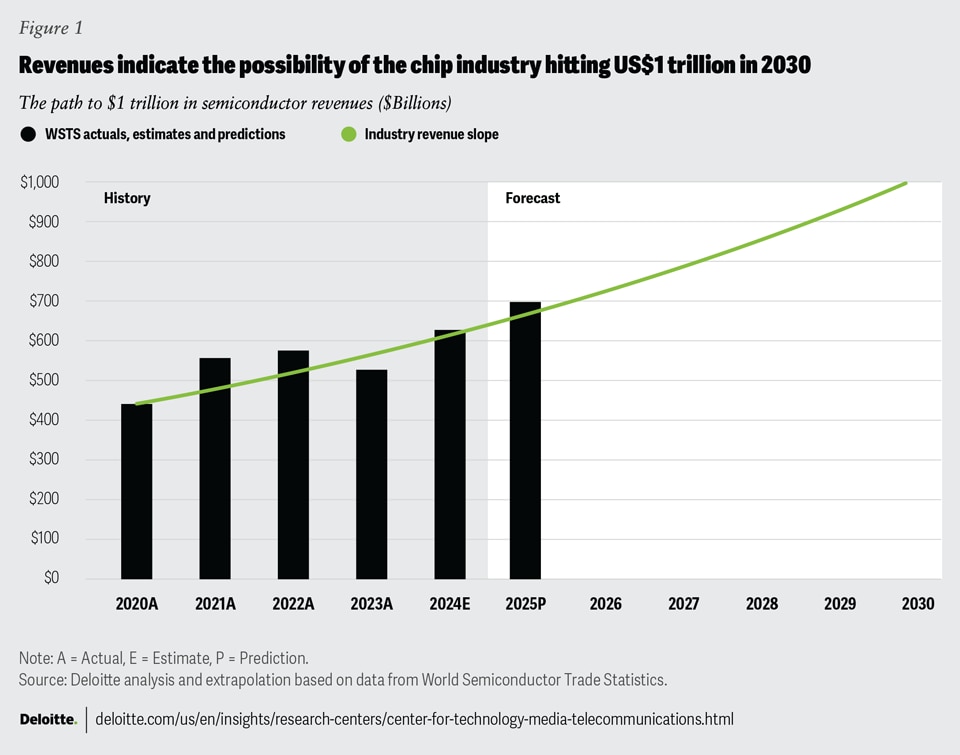
Source : Deloitte, février 2025.
Bénéficiaires de HIND :
- AMETEK : une participation dans HIND. Un fabricant mondial avec une forte présence dans l’industrie des semi-conducteurs. CAMECA , une filiale d'AMETEK, utilise des instruments de spectrométrie de masse d'ions secondaires (SIMS) et de tomographie par sonde atomique (APT) dans la recherche et la conception de dispositifs semi-conducteurs.
- Eaton Corporation : une autre participation de HIND. Également actif dans cet espace. A remporté un contrat pour aider à alimenter la recherche sur les semi-conducteurs dans les installations de NY CREATES à New York. Le projet, qui comprend une salle blanche de 50 000 pieds carrés, devrait être achevé en 2026. Il est partiellement financé par le CHIPS & Science Act.
Synthèse
Il existe actuellement une triple opportunité dans le secteur industriel que les investisseurs pourraient vouloir saisir. La voie suivie par les États-Unis pour se rétablir, se reconstruire et rapatrier leurs biens offre des opportunités dans des domaines tels que la construction et les machines lourdes, l’aérospatiale et la défense, les composants et équipements électriques, et bien d’autres.
Le FNB Harvest Industrials Leaders Income (HIND:TSX) possède 20 titres industriels de pondération égale. Il offre une exposition à ces entreprises industrielles de premier plan et aux tendances émergentes qui alimentent leur croissance. De plus, il offre une diversification sectorielle au sein de l’espace industriel pour réduire la volatilité du portefeuille.
HIND | FNB Harvest de revenu Leaders industriels
Avantages :
- Accès aux principales entreprises industrielles et aux principales tendances
- Diversification sectorielle au sein de l'industrie
- Appels couverts pour générer des revenus et réduire la volatilité
- 0,07 $ distribution mensuelle en espèces par unité
- 7,29% Rendement actuel (au 20 juin 2025)
- Un revenu fiscalement avantageux
Performance annuelle et
Au 30/09/2026
| Symbole | 1M | 3M | 6M | YTD | 1Y | 2Y | SI |
|---|---|---|---|---|---|---|---|
| HIND | (1.72) | (6.32) | 7.46 | 13.34 | 14.15 | 11.91 | 11.08 |
Clause de non-responsabilité
Des commissions, des frais de gestion et des dépenses peuvent tous être associés à un investissement dans les Fonds négociés en bourse Harvest (gérés par le Groupe de portefeuilles Harvest Inc.). Veuillez lire le prospectus correspondant avant d'investir. Les taux de rendement indiqués sont les rendements totaux composés annuels historiques (à l'exception des chiffres d'un an ou moins, qui sont des rendements totaux simples), y compris les variations de la valeur unitaire et le réinvestissement de toutes les distributions, et ne tiennent pas compte des ventes, rachats, distributions ou des frais optionnels, ni de l'impôt sur le revenu payable par tout détenteur de titres, lesquels auraient réduit les rendements. Les fonds ne sont pas garantis, leurs valeurs changent fréquemment et les performances passées peuvent ne pas se reproduire. L'investissement fiscal et toutes les autres décisions doivent être prises avec l'aide d'un professionnel qualifié.
Certaines déclarations incluses dans cette communication constituent des déclarations prospectives (« DPP »), y compris, mais sans s’y limiter, celles identifiées par les expressions « prévoir », « avoir l’intention de », « va » et autres expressions similaires dans la mesure où elles se rapportent au Fonds. Les FLS ne sont pas des faits historiques, mais reflètent les attentes actuelles de Harvest, le gestionnaire du Fonds, concernant les résultats ou les événements futurs. Ces déclarations sont soumises à un certain nombre de risques et d'incertitudes qui pourraient faire en sorte que les résultats ou les événements réels diffèrent sensiblement des attentes actuelles. Bien que Harvest, le gestionnaire du Fonds, estime que les hypothèses inhérentes aux FLS sont raisonnables, les FLS ne sont pas des garanties de performance future et, par conséquent, le lecteur est invité à ne pas accorder une confiance excessive à ces énoncés en raison de l'incertitude qui leur est inhérente. Harvest, le gestionnaire du Fonds, ne s'engage pas à mettre à jour publiquement ou à réviser de quelque manière que ce soit tout FLS ou toute information, que ce soit en raison de nouvelles informations, d'événements futurs ou d'autres facteurs qui affectent ces informations, sauf si la loi l'exige.